
Hill and ghat driving: how to use engine braking, climb steadily and come down safely
By the TripRank team · 3 November 2026 · 7 min read
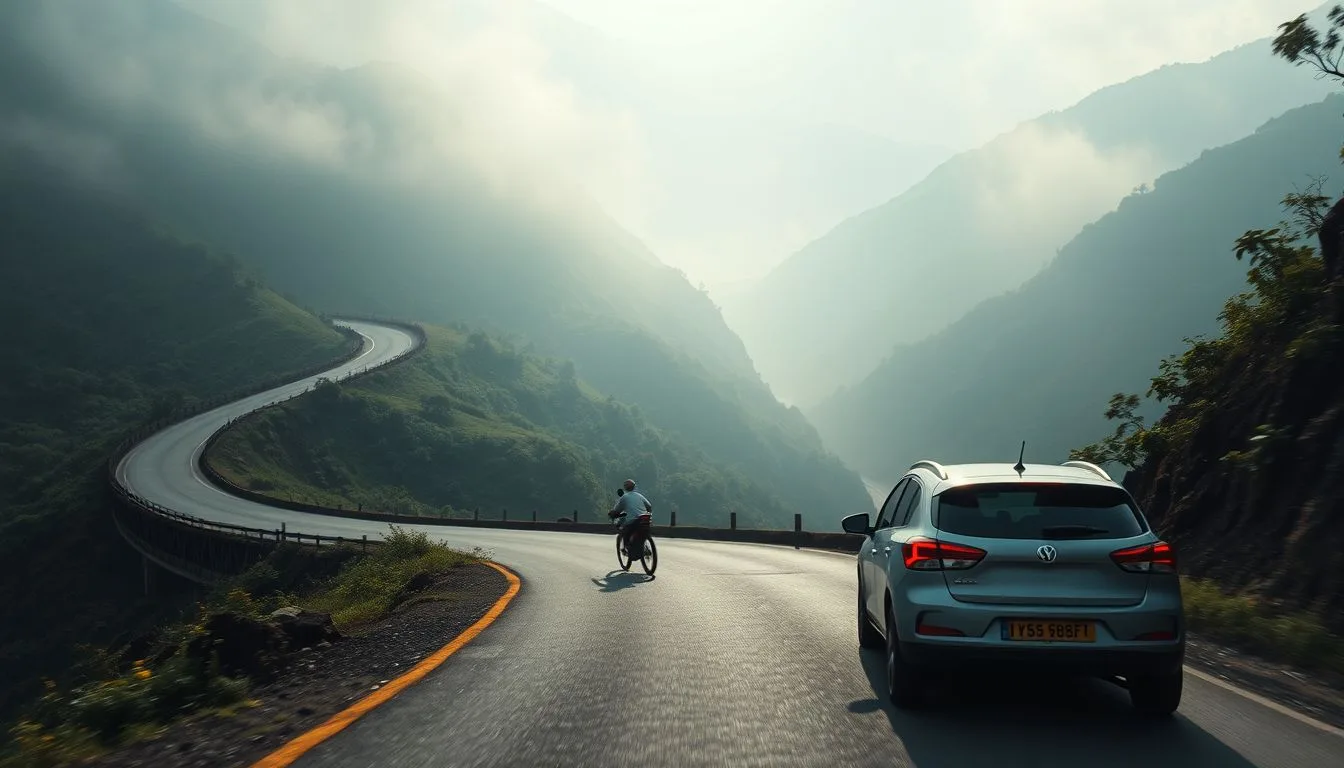
A ghat road asks two things of you: patience on the way up and discipline on the way down. Most trouble on hills is not about power. It is about brakes that get too hot, gears that are too tall, and bends taken faster than the driver can see. Everything below comes from one idea: let the engine and the gearbox do the work, and use the brakes only to finish the job.
Climbing: keep it steady, not fast
- Drop a gear before the engine struggles. If the car is labouring and the revs sag, you are already late. Changing down early keeps the engine in the range where it pulls cleanly.
- Hold a steady throttle. Sudden bursts waste fuel and unsettle the car on a bend. Smooth is quicker on a hill too, as our guide to smooth driving explains.
- Keep your distance on slopes. A heavy vehicle ahead can roll back a little when it restarts, so do not tuck in close behind it.
- Use the air conditioning thoughtfully. On a long steep climb a small car feels the extra load. Switching it off for the steepest stretch is a fair trade.
Descending: engine braking is your friend
If you come down in a high gear and ride the brake pedal, the brakes heat up. Hot brakes fade, which means the pedal still moves but the car slows less. That is the classic cause of a runaway on a long descent. The cure is to select a lower gear before the slope steepens, so the engine's own resistance holds the speed.
- Manual car: use the gear you would need to climb the same slope, usually second or third on a steep one.
- Automatic: use the manual or low mode, or the paddles, to hold a lower gear. Do not leave it in plain drive and brake all the way down.
- Electric car: raise the regenerative setting. It slows the car and returns some energy to the battery.
- Never coast in neutral. You lose engine braking and, in many cars, some assistance. It is also unsafe if you need to accelerate suddenly.
Then brake in short, firm presses rather than one long drag, and let the pads cool between them.
Hairpins and blind bends
- Slow down before the bend, not in it. Finish your braking while the car is still straight.
- Stay in your lane, especially on the inside of a blind hairpin, where oncoming traffic often swings wide.
- Use a short horn tap on blind bends where local practice is to warn oncoming vehicles, and always be ready to stop.
- Look through the bend. Your hands follow your eyes, and a smooth line costs less time than a late correction.
Sharing narrow roads
On a single-lane stretch the vehicle going uphill normally has priority, because it is harder for it to restart and easier for you to stop on the way down. If you have to give way, pull into the widest spot you can find rather than reversing along a drop. Give trucks and buses plenty of room, and do not overtake on a bend however empty it looks.
Before you go and while you are there
- Check brakes, tyres and coolant. Our tyre guide covers pressure and tread, and the road trip checklist covers the rest.
- Start the day with enough fuel or charge. Filling stations can be far apart in the hills.
- Expect fog and rain to cut visibility quickly; slow down earlier than you think you need to.
- Stop at viewpoints to rest, not just to take photos.
What the trip summary shows
A hill drive looks different on the map. With TripRank you can see the climb in the elevation profile, and you will notice that the hard-brake marks bunch up on the descents if you rode the pedal. Comparing a trip where you used engine braking with one where you did not is a quick way to see the habit change in your driving score.
Heading for the hills soon? Record the drive with TripRank and look at the climb afterwards.
Frequently asked questions
Which gear should I use going downhill?
Roughly the gear you would use to climb the same slope, often second or third on a steep descent. Select it before the slope steepens so the engine holds your speed.
Is it bad to coast downhill in neutral?
Yes. You lose engine braking and some control, and it is unsafe if you need to accelerate suddenly. Stay in gear.
Who has priority on a narrow hill road?
Normally the vehicle going uphill, since it is harder to restart on a slope. Pull into the widest space available if you must give way.
How do I stop my brakes overheating?
Use a lower gear so the engine does most of the slowing, and brake in short firm presses with gaps for the pads to cool, instead of resting your foot on the pedal.
 Car speedometer app: how to pick an accurate GPS speed app (and what to avoid)
 Car mileage tracker and logbook: how to log your trips automatically
 Car acceleration app: how to measure 0 to 100 km/h with your phone (safely)