
Overtaking safely and keeping lane discipline on Indian highways
By the TripRank team · 4 November 2026 · 6 min read
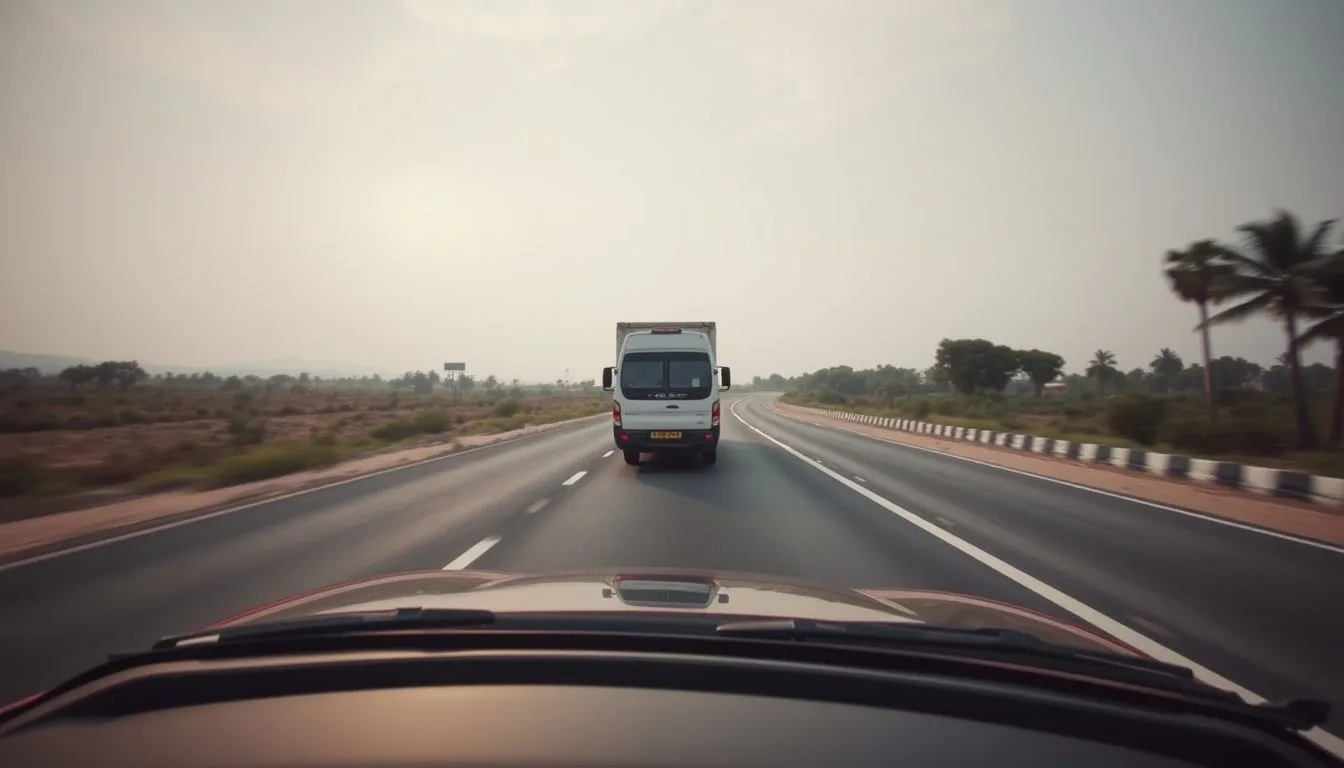
An overtake looks like a short burst of speed, but it is really a judgement call. You are choosing to spend a few seconds on the wrong side of the road, so the question is never "can I get past?" but "is there a clear, safe reason to?" If the honest answer is "I am not sure", the answer is no.
When not to overtake
- On or near a bend, a crest, a bridge or any place where you cannot see far ahead.
- At junctions, village entrances, and near schools or crossings.
- When the road ahead has solid or double lines that forbid it.
- When the vehicle you want to pass is itself overtaking or about to turn.
- In fog, heavy rain or at night when you cannot judge how fast oncoming lights are closing. Our guides to monsoon driving and night highway driving explain why patience pays more in those conditions.
A calm sequence
- Look well ahead and check that the road is clear for far longer than you think you need. A vehicle in the distance closes much faster than it seems.
- Check the mirrors and blind spot. Someone behind you may already be overtaking.
- Signal early, so everyone knows what you intend.
- Drop back a little so you can see past the vehicle ahead and build speed before you pull out.
- Move out decisively, pass without lingering alongside, and do not cut back in until you can see the vehicle you passed in your mirror.
- Return to your lane smoothly, cancel the signal and settle back to a steady speed.
If the gap closes as you start, abort early: ease off and tuck back in behind. Committing to a bad overtake is the real danger.
Lane discipline
- Keep left unless overtaking where traffic drives on the left, as in India. Do not sit in the right lane at a steady pace.
- Stay in one lane. Weaving between lanes saves seconds at best and creates sudden braking for everyone behind.
- Keep a gap of a few seconds behind the vehicle ahead. It gives you room to see and choose, which makes an overtake safer.
- Let faster traffic pass. Moving left a little for a vehicle that wants to go by is cheaper than a close call.
Why it shows in your score
Smooth, early decisions mean fewer hard brakes and fewer sudden accelerations, and those are exactly what the driving score looks at. Our guide to smooth driving builds on the same habit: look further ahead, decide earlier and act gently. Review a highway trip afterwards and see whether the hard-brake marks cluster around overtakes.
Want to see your own highway habits? Record your next drive with TripRank.
Frequently asked questions
When should I not overtake?
On or near bends and crests, at junctions, near villages, schools and crossings, where lines forbid it, in fog or heavy rain, and whenever you cannot see far enough ahead.
What is the safest way to overtake?
Look far ahead, check mirrors and blind spot, signal early, build speed, pass decisively and return to your lane only when you can see the passed vehicle in the mirror.
What should I do if the gap closes during an overtake?
Abort early. Ease off and move back in behind the vehicle. Continuing a bad overtake is far more dangerous.
Which lane should I drive in?
Keep to the lane for slower traffic, the left in India, and use the right lane to overtake and then move back, instead of staying there at a steady pace.
 Car speedometer app: how to pick an accurate GPS speed app (and what to avoid)
 Car mileage tracker and logbook: how to log your trips automatically
 Car acceleration app: how to measure 0 to 100 km/h with your phone (safely)