
Speedometer vs GPS speed: why your car shows more than your phone, and which one to trust
By the TripRank team · 8 November 2026 · 5 min read
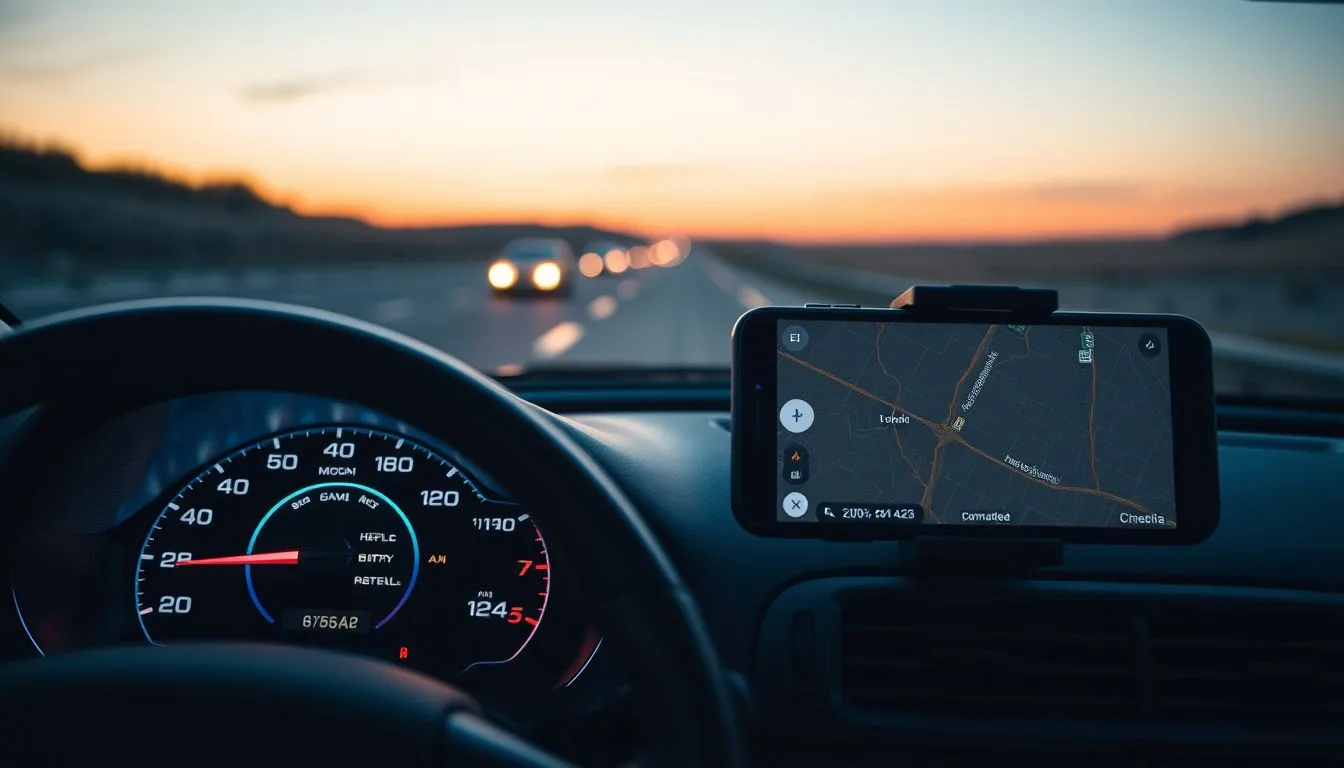
If you have ever glanced at your dashboard and your phone at the same time, you have probably seen two different speeds. The dashboard says 100 km/h, the phone says 96. Neither is broken. They measure speed in different ways, and car makers also add a small safety margin on purpose.
Why the speedometer reads high
A speedometer counts how fast the wheels turn and converts that to speed. Rules in many countries require a speedometer never to read lower than the true speed, so makers set it to err on the high side. A reading a few percent above the real speed is normal and legal.
- Tyre size: worn tyres are slightly smaller, new tyres are slightly bigger, and wheels of a different size change the calculation.
- Tyre pressure: low pressure shrinks the rolling circle a little. See the tyre pressure and tread guide.
- Deliberate margin: the display is calibrated to read a little above the truth.
How GPS works out speed
GPS speed comes from satellites. Your phone measures how its position, and the radio signal itself, change from moment to moment. On open road this is usually very close to true speed because it does not depend on your tyres at all.
When GPS is less accurate
- Tunnels, parking structures and dense city canyons where the sky is blocked.
- The first few seconds after starting, before the phone has a good fix.
- Very low speeds, where tiny position errors look like movement.
Over a long, open drive these effects average out, so GPS is a reliable reference for the whole trip.
Which one should you trust?
For speed limits and enforcement, remember that authorities measure true speed, so GPS is closer to what they see than a dashboard that reads high. For feel while driving, use the dashboard, because it reacts instantly. For records, top speed and comparisons, GPS is the fairer number because it is the same on every car.
How TripRank uses this
TripRank records speed from GPS, so a trip's top speed and average speed are comparable between cars and drivers. If your numbers look a few percent lower than your dashboard, that is why. You can test your own car: drive at a steady speed on an open road and compare. Track your next drive with TripRank and see your real figure.
Frequently asked questions
Is GPS speed more accurate than my speedometer?
On open road, usually yes, because it does not depend on tyre size. In tunnels or very dense cities GPS can be less steady.
How much higher should a speedometer read?
A few percent above true speed is common. Exact tolerances depend on the country and the car.
Why does my phone show a lower top speed than my car?
The car's dashboard is set to read a little high and the phone uses satellites for the real figure, so the phone is usually lower.
Does tyre size change my speedometer?
Yes. Different or worn tyres change how far the wheel travels in one turn, which changes the speedometer reading.
 Car speedometer app: how to pick an accurate GPS speed app (and what to avoid)
 Car mileage tracker and logbook: how to log your trips automatically
 Car acceleration app: how to measure 0 to 100 km/h with your phone (safely)