
Driving in fog: how to see, be seen and stay safe on winter mornings in India
By the TripRank team · 7 November 2026 · 6 min read
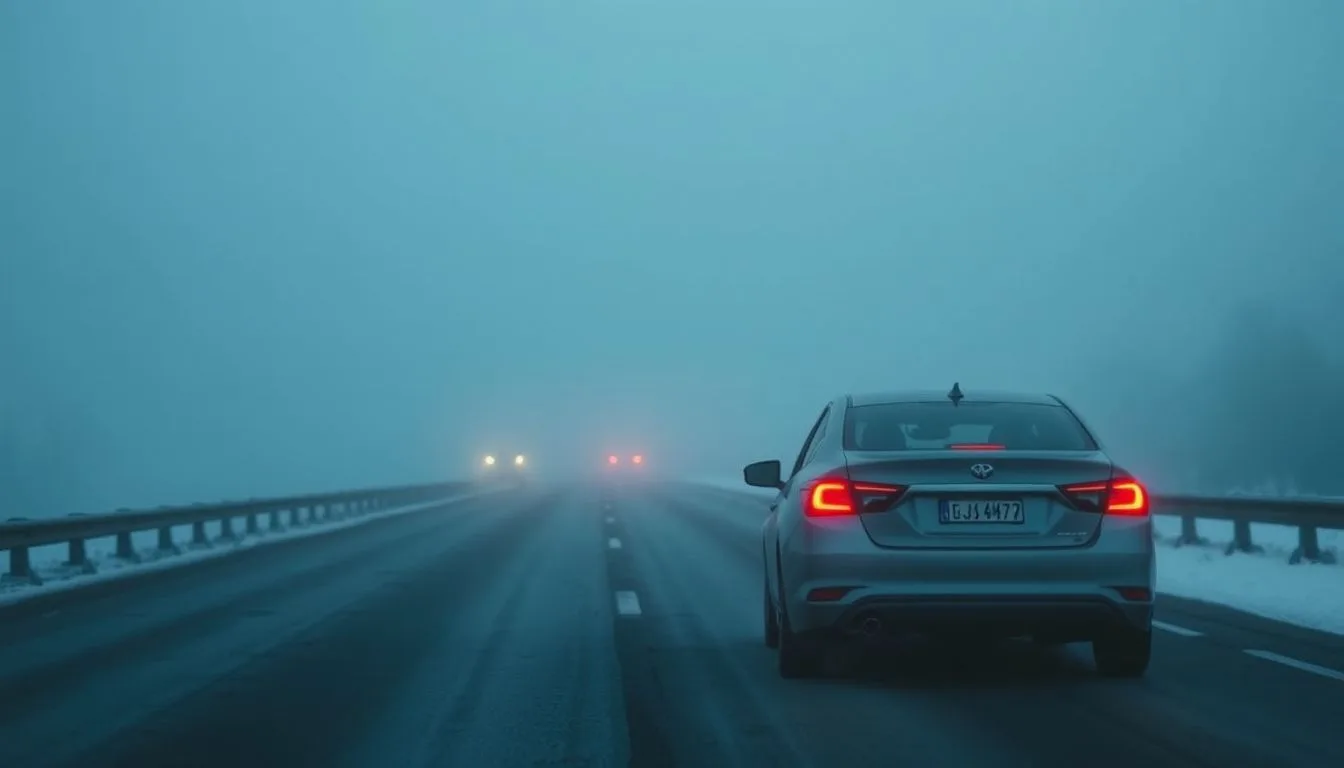
Fog is hard because it hides the danger until it is close. On a northern highway in winter, visibility can fall from a kilometre to a few car lengths within minutes. The rule that covers everything is simple: drive so that you can stop within the distance you can actually see.
Before you set off
- Check the weather and local fog warnings. If visibility is very poor, consider delaying the trip until it lifts.
- Clean the windscreen, mirrors and all lights, inside and out. Fog adds moisture and a dirty screen scatters light even more.
- Check your wipers and top up washer fluid. Keep the demister working.
- Fill up before you leave and tell someone your route. The road trip checklist helps.
Use your lights correctly
- Dipped headlights are your main light in fog. Main beam is a mistake: the light bounces off the water droplets back into your eyes.
- Front fog lamps sit low and spread wide, which helps you see the road edge. Use them only while visibility is poor, and switch them off when it clears, because they dazzle others.
- Rear fog light (if you have one) makes you visible from behind in thick fog. Turn it off when traffic bunches close behind you or when visibility improves.
- Hazard lights while moving are not a substitute for these. Use them for a stopped car.
Slow down and keep more distance
Speed that was fine on a clear day is too fast in fog. Slow down so you could stop inside what you can see, and double or triple the gap behind the vehicle in front. Our guide to following distance explains how to measure the gap. Brake early and gently, and avoid sudden moves; a car close behind you may not see you in time.
Follow the road, not the car ahead
- Use the road markings and the edge line as a guide, but do not follow the tail lights of the car in front too closely. It tempts you to match its speed.
- Open the window slightly so you can hear horns and engines.
- Do not overtake. You cannot see what is coming. Our overtaking guide lists the situations where staying put is the only good choice.
When to stop
If visibility is too poor to continue, pull off the road completely, away from the carriageway, into a petrol station, a dhaba or a safe side road if you can find one. Switch on your hazard lights and keep sidelights off, so that following drivers do not use your lights as a guide and drive into you. If you must stop on the road edge, get everyone out and away from the car. Wait for the fog to lift.
Review the drive in TripRank
Fog drives are a good test of your habits. The trip summary shows your speed and hard brakes; a steady, lower speed with few hard brakes is what you want. Our night driving guide covers many of the same ideas for the dark.
Heading out on a foggy morning? Record your drive with TripRank and see how smoothly you handled it.
Frequently asked questions
Should I use main beam in fog?
No. Main beam reflects off the water droplets and dazzles you. Use dipped headlights, plus fog lamps if you have them.
When should I use fog lights?
Only while visibility is poor. Front fog lamps help you see the road edge, and a rear fog light helps others see you. Switch them off when it clears because they can dazzle other drivers.
How fast should I drive in fog?
Slowly enough that you can stop within the distance you can see, with a much bigger gap than usual to the vehicle ahead.
What should I do if the fog is too thick?
Pull off the road completely into a safe place, switch on the hazard lights and wait for it to lift. Avoid stopping on the carriageway.
 Car speedometer app: how to pick an accurate GPS speed app (and what to avoid)
 Car mileage tracker and logbook: how to log your trips automatically
 Car acceleration app: how to measure 0 to 100 km/h with your phone (safely)