
Driving with heavy luggage or a roof carrier: safety, fuel and handling tips
By the TripRank team · 15 November 2026 · 5 min read
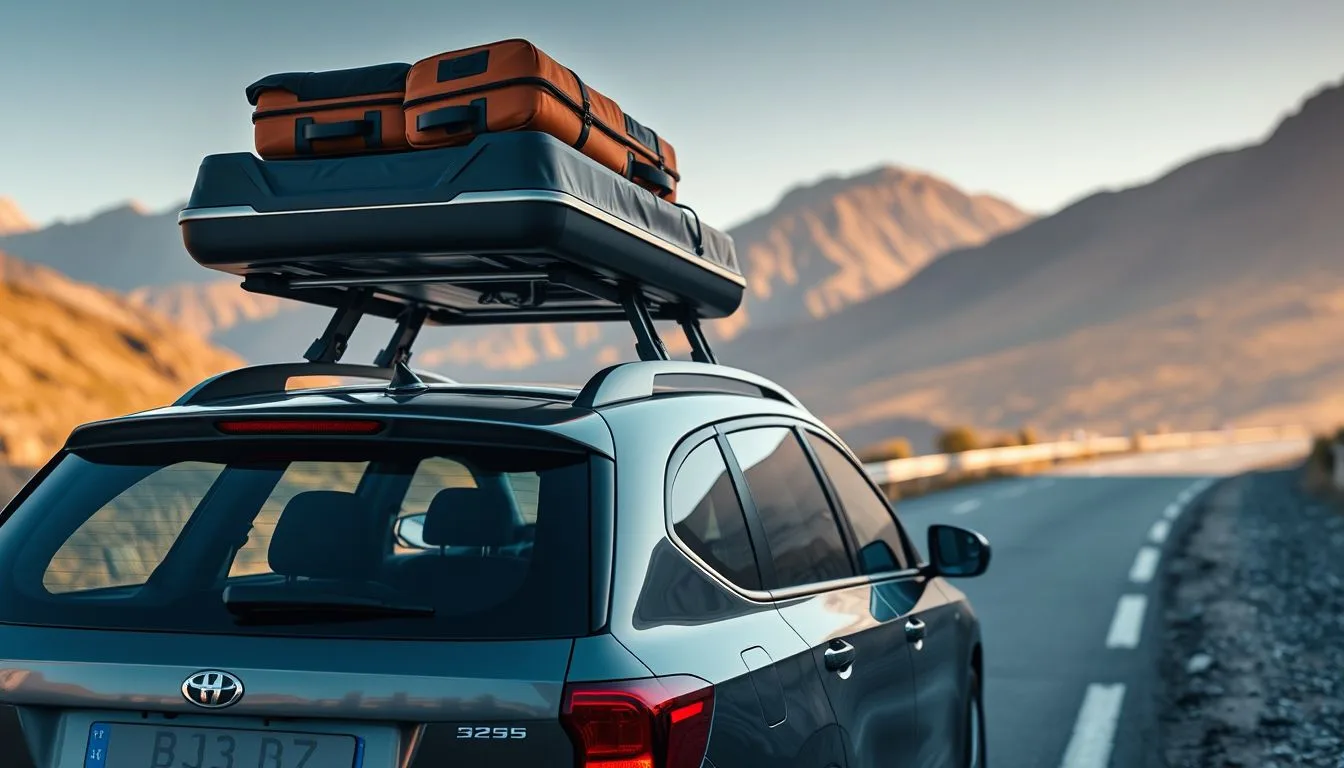
Family trips mean bags, coolers and sometimes a roof carrier. The extra weight changes how the car brakes, steers and uses fuel.
What extra weight does
- Longer braking distance. Keep a bigger following distance.
- Slower acceleration, which makes overtaking harder to judge.
- More fuel use. A heavy car works harder on every climb. See save fuel.
- Different handling, with more body roll and slower response in turns.
Load the car sensibly
- Put heavy items low and close to the middle of the car, not high or at the very back.
- Pack things so they cannot slide forward when you brake. Loose objects become projectiles.
- Keep the rear window and mirrors clear.
- Do not exceed the load limit in your manual.
- Raise tyre pressure to the loaded figure if the manual gives one.
Roof carriers and racks
- Check the roof load limit. It is much lower than the load the car can carry inside.
- Roof weight raises the centre of gravity, so be slower in bends and in crosswinds.
- Tie everything down tightly and check the straps at the first stop.
- A carrier adds wind drag, so expect higher fuel use and some wind noise.
- Remove it when you do not need it.
- Mind low-clearance parking entrances and tunnels.
Drive differently
Brake earlier, take bends slower and use gentler inputs. A loaded car on ghat roads needs extra care on descents. Plan your trip with the road trip checklist and take rest stops often.
See the difference
Record a loaded and an unloaded trip with TripRank and compare your real mileage.
Frequently asked questions
Does heavy luggage increase fuel use?
Yes. More weight means the engine works harder, especially in traffic and on climbs.
Is a roof carrier safe?
Yes if it is within the roof load limit, packed well and tied down. It raises the centre of gravity, so drive slower in bends and wind.
Should I change tyre pressure for a full load?
Many manuals give a higher pressure for full load. Check yours and follow it.
Where should heavy items go?
Low and near the middle of the car, secured so they cannot slide forward.
 Car speedometer app: how to pick an accurate GPS speed app (and what to avoid)
 Car mileage tracker and logbook: how to log your trips automatically
 Car acceleration app: how to measure 0 to 100 km/h with your phone (safely)